2026 Spring Machine Buying Guide
Author: Cendly Deng (Vice General Manager, Export)
Reviewed by: YF Chief Engineer & After-Sales Manager (Internal Review)
Last updated: 2026-01-01
Contents
- 1. Ready to Buy a Spring Machine in 2026? Read This First
- 2. 2026 Update: What Buyers Should Know This Year
- 3. 60-Second Decision Tree: Pick the Right Machine Type Fast
- 4. What Exactly Is a Spring Machine?
- 5. How Do I Choose the Right Spring Machine?
- 6. How Can I Assess Spring Machine Quality Before Buying?
- 7. What Should I Look for in a Spring Machine Factory?
- 8. Chinese Spring Machine Brands (Shortlist)
- 9. Why YF (Yinfeng) Is a Popular Choice
- 10. Why Choose YF Specifically? (Practical Reasons)
- 11. Contact Me: Get a Model Recommendation in 12–24 Hours
- 12. FAQ (Buyer Questions I Get Every Week)
- 13. Conclusion
- References
1. Ready to Buy a Spring Machine in 2026? Read This First
Buying a spring machine can feel overwhelming. I’ve seen buyers lose months (and serious money) because the machine type looked “similar” on paper, but the capability didn’t match the spring drawing.
Here’s the simplest truth:
A spring machine is industrial equipment that automatically forms wire into springs or wire forms (compression / extension / torsion / wire parts). The right machine is chosen by matching (1) wire diameter range, (2) spring type & complexity, (3) required output, and (4) changeover frequency.
Fast CTA (I place this early on purpose):
If you send me your spring drawing (PDF/DXF/STEP) + wire diameter + target output, I can recommend the right machine model and tooling concept within 12–24 hours.
Send Inquiry (Contact Form) | Email Me | WhatsApp
2. 2026 Update: What Buyers Should Know This Year
I’m updating this guide because the market changed in ways buyers actually feel:
1) Lead time pressure is real. Many factories advertise “fast delivery,” but only a few can ship consistently. If your production schedule is tight, ask what is truly in stock vs “can be produced quickly.”
2) Compliance expectations are rising. For EU/UK and some large OEMs, buyers ask more questions about safety configuration, documentation, and traceability. Even if you don’t need full documentation today, you will benefit from a supplier that can support it.
3) Changeover efficiency matters more than ever. Many buyers are shifting to smaller batches and more SKU variety. This usually pushes the choice toward machines that are faster to set up (often camless / servo-driven systems).
CTA (place after this update):
If you tell me your market (EU/UK/US/etc.) and your product mix (many SKUs vs stable product), I’ll recommend the most cost-effective configuration.
Send Inquiry
3. 60-Second Decision Tree: Pick the Right Machine Type Fast
Use this quick decision tree before you go deep into specs.
Step 1 — What are you producing?
- Mostly compression/extension/torsion springs with standard coils → start with CNC spring coiling machine
- Complex wire forms / multiple bends / shaped ends → you likely need CNC spring forming machine or 2D/3D wire bending machine
- High changeover frequency + complex parts + you want faster setup → check camless spring machine
- Non-spring wire parts (frames, hooks, racks, structural parts) → 2D/3D wire bending machine is often the correct category
Step 2 — Wire diameter is your hard constraint
If your wire is outside the machine range, everything else is irrelevant. Start with wire range first.
Step 3 — Complexity & process requirements
Ask yourself:
- Do you need 360° wire rotation during feeding?
- Do you need multi-angle forming and tight repeatability?
- Do you need secondary actions (cutting, free arm, spinner, etc.)?
Step 4 — Output + changeover
- High output, stable product → traditional setups can be very cost-effective
- Many designs, frequent changeover → camless often wins on total productivity
CTA (right after decision tree is a high-conversion position):
Send me your drawing + wire diameter. I’ll tell you the correct machine category first (coiler / former / camless / bender), then the recommended model range.
Send Inquiry | Email Me
4. What Exactly Is a Spring Machine?
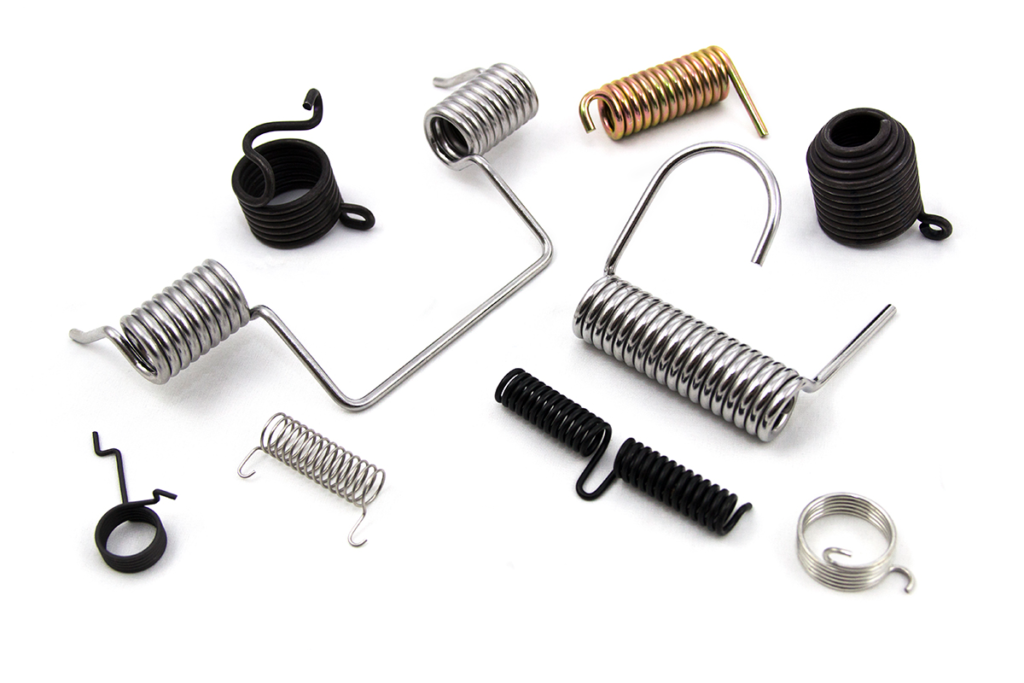
A spring machine is specialized equipment that feeds wire and forms it into a spring or wire-shaped component using programmed movements (often CNC). The goal is consistent geometry, stable tolerances, and repeatable production.
4.1 Core Functionality
In practical terms, a spring machine does four things:
1) Feeds wire from coil stock with controlled accuracy
2) Forms the wire using tools/axes/servo movements
3) Cuts to length (and sometimes performs end forming)
4) Repeats the cycle at production speed with stable repeatability
If you care about stable production, pay attention to:
- servo stability & control logic
- mechanical rigidity
- tooling design
- guide & feed accuracy
4.2 Main Types of Spring Machines
From a buyer’s view, “spring machine” is an umbrella term. Here are the main categories I recommend most often:
- CNC Spring Coiling Machines
Best for standard coil springs: compression, extension, torsion (within capability). - CNC Spring Forming Machines
Best for more complex springs and wire forms with multiple operations. - CNC Cam-less Spring Machines
Servo-driven axes (no mechanical cams). Often faster setup, easier changeover, strong for complex parts. - 2D/3D Wire Bending Machines
Best for non-spring wire forms: frames, hooks, racks, structural wire components.
5. How Do I Choose the Right Spring Machine?
My working rule: wire range + spring type + complexity + output + changeover frequency.
If you do these five correctly, you avoid 90% of costly mistakes.

5.1 Wire Range Quick-Selection Table
Where to insert this table:
Put this table right after your selection introduction because it reduces bounce rate and makes the guide “usable”.
| Wire Diameter Range (Typical) | Common Products | Recommended Machine Type | Notes I Tell Buyers |
|---|---|---|---|
| 0.15–0.8 mm | small compression springs, electronics springs | CNC coiler / small camless | Prioritize feed stability & tooling detail |
| 0.2–2.6 mm | battery springs, tension/torsion small springs, wire forms | camless often wins | If changeover is frequent, camless saves time |
| 0.9–3.5 mm | general industrial springs, medium torsion | coiler / camless | Check required end forming |
| 1.5–5.0 mm | automotive & industrial springs, stronger wire forms | heavy-duty forming / camless | Rigidity + power matters |
| 3.0–8.0 mm | heavy-duty springs, large wire forms | heavy-duty camless / forming | Confirm tooling and safety enclosure |
| 8–16 mm | very heavy springs / structural parts | custom solution | Usually needs custom engineering |
CTA directly under table (high intent):
If you tell me your wire diameter + spring type + target output, I’ll recommend the best-fit model range first, then confirm feasibility by sample trial.
Send Inquiry
5.2 Step-by-Step Selection Process
Step 1 — Define your spring requirement clearly
I usually ask buyers for:
- spring type (compression / extension / torsion / wire form)
- wire material (carbon steel / stainless / alloy)
- wire diameter range (min–max)
- finished dimensions + tolerance requirement
- monthly output target (pieces/day or pieces/month)
- changeover frequency (how often you switch designs)
Step 2 — Match machine capability to your actual complexity
Ask:
- Do you need wire rotation for multi-angle forming?
- Do you need multi-station actions (cutting / free arm / spinner / special end forming)?
- Are you producing many different SKUs?
Step 3 — Decide based on production reality (not brochure speed)
Two buyers can make the same part, but one needs:
- highest speed (stable single product)
- fastest changeover (many designs)
- maximum process stability (tight tolerance)
That’s why I recommend confirming with sample trial whenever possible.
Step 4 — Confirm the supplier’s delivery and support capability
Before you pay deposit, confirm:
- what is in stock
- what the true lead time is
- what training/support looks like after installation
- spare parts policy for the first 12 months
5.3 Cam vs Camless vs Wire-Rotation: What’s the Real Difference?
Where to insert:
Put this section after the selection steps. This is one of the most searched “comparison intent” topics.
| Buyer Situation | Cam-Driven CNC (Traditional) | Camless CNC (Servo Axes) | Wire Rotation / Wire-Turning Feature |
|---|---|---|---|
| Stable product, long runs | Often very cost-effective | Works too, but not always necessary | Only if part needs it |
| Many SKUs, frequent changeover | Changeover can be slower | Usually faster setup & program recall | Often helpful for complex shapes |
| Complex shapes / multi-angle | Limited by mechanical structure | More flexible by servo control | Critical for true 3D/multi-angle parts |
| Maintenance preference | Mechanical complexity | Servo/control complexity | Adds capability, confirm stability |
My practical advice:
- If your business runs one or two designs all year → cam-driven can be a good value
- If you run many designs or you iterate frequently → camless pays back quickly
- If you need 3D wire forming or multi-angle geometry → wire rotation becomes important
5.4 Total Cost of Ownership (TCO): Don’t Buy on Price Alone
A machine that is “$2,000 cheaper” can be more expensive within one year if it causes:
- frequent downtime
- slow changeover
- unstable tolerance → scrap rate
- long spare parts wait time
- weak training/support
A simple TCO checklist I use with buyers:
- How many hours/month can you tolerate downtime?
- How many design changes per week?
- What scrap rate is acceptable?
- How quickly can you receive critical spare parts?
- Do you have in-house technicians or do you rely on supplier support?
CTA:
If you share your production reality (batch size + changeover), I’ll recommend the most economical setup—not just the cheapest machine.
Send Inquiry
6. How Can I Assess Spring Machine Quality Before Buying?
Quality is not a slogan. I advise buyers to check it in three layers: structure → components → sample trial.
6.1 Build & Structure Checklist
- frame rigidity and stability
- assembly quality (fit & finish, alignment)
- guide rails, sliders, and base stability
- wiring and layout quality (clean, serviceable)
6.2 Key Components Checklist
Ask your supplier clearly:
- servo motor/drive brand and configuration
- control system stability and service support
- bearings/linear guide brand level
- tooling material and heat treatment quality
- safety configuration (enclosure, emergency stop, warning light)
6.3 Precision & Sample Trial (FAT) Checklist
This is where you avoid regret. I strongly recommend:
- produce your part (or closest similar) during FAT
- verify repeatability over a run (not only one piece)
- confirm tolerance ability and consistency
- record a test video (for your internal approval)
FAT questions I suggest you ask:
1) Can the machine run my drawing for at least 30–60 minutes continuously?
2) What is the measured repeatability?
3) How long does a changeover take between two programs?
4) What spare parts are included in standard packing?
5) What training is included (remote / on-site) and what’s the response time?
7. What Should I Look for in a Spring Machine Factory?
I tell buyers: a “machine supplier” is easy to find; a “production partner” is rare.
Evaluate the factory like you evaluate a long-term partner.
7.1 Factory Scorecard (Copy-Paste)
Where to insert:
Put this scorecard right after the factory section intro. It makes your guide feel expert and actionable.
- Years focused on spring machines: ___ years
- Product range maturity (not just “many models”): ___
- True delivery ability (stock/semi-finished): ___
- Sample trial capability (FAT support): ___
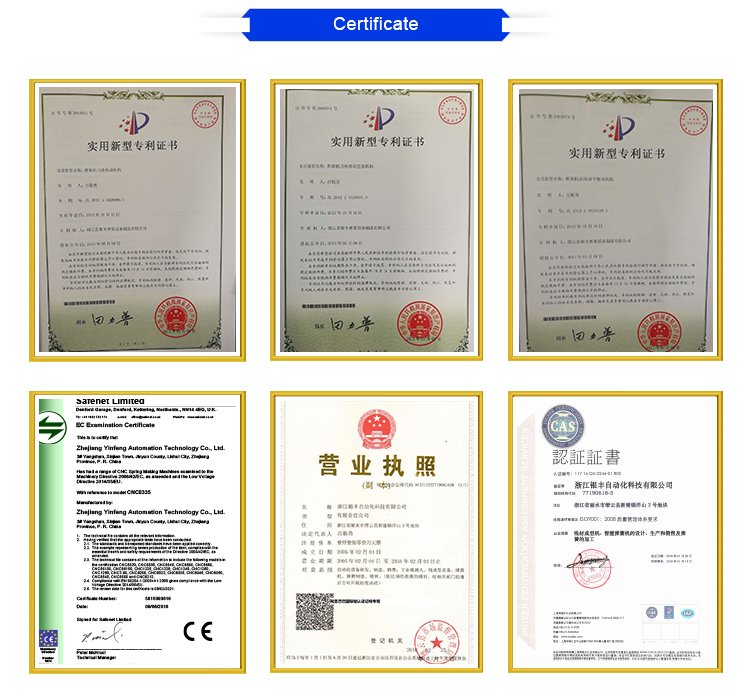
- Quality system (certifications + internal control): ___
- Training (remote/on-site, materials, language): ___
- After-sales response time (typical): ___ hours
- Spare parts availability (first 12 months plan): ___
- Communication transparency (videos, progress updates): ___
- Export experience (packing, docs, logistics): ___
8. Chinese Spring Machine Brands (Shortlist)
Note on why I include competitors:
Buyers always compare. I prefer to shortlist transparently and then explain how to choose based on your product and production style.
8.1 YF Spring Machinery (Zhejiang Yinfeng Automation Technology Co., Ltd.)
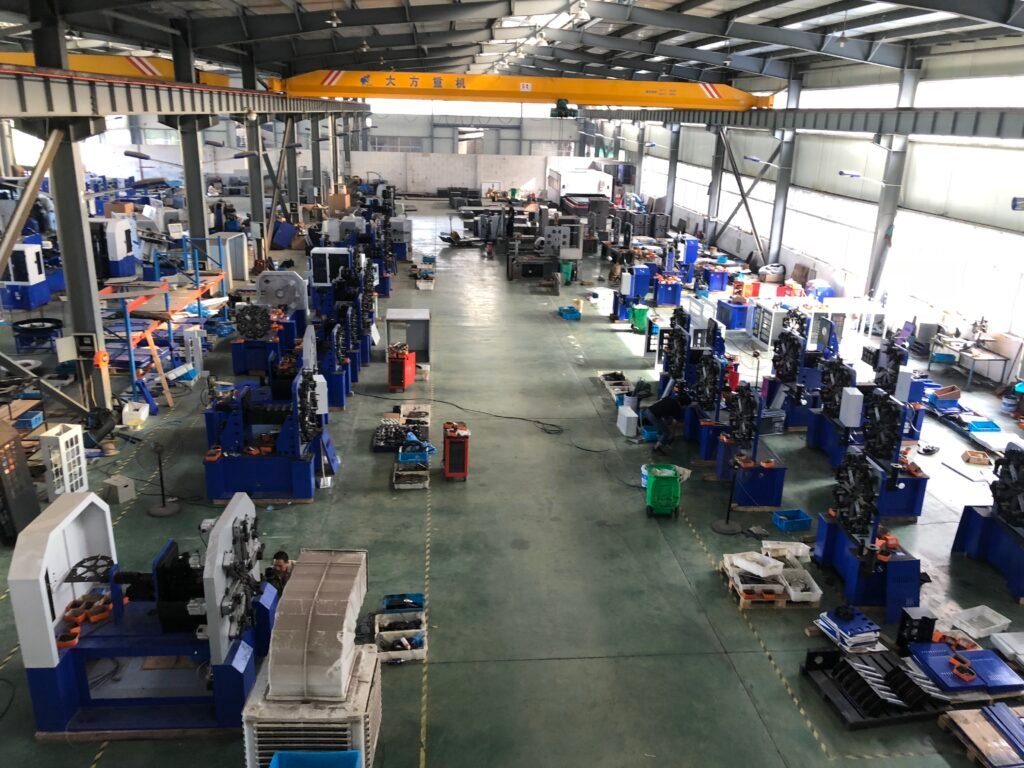
This is my own factory. I include us here for transparency. We focus on CNC spring machines and wire-forming equipment with an export-driven support system and a wide product range.
Visit YF | Send Inquiry

8.2 WNJ (Zhejiang Omnipoten Spring Machine Co., Ltd.)
WNJ is often shortlisted by buyers looking for a broader portfolio across coiling/forming/camless categories.
WNJ Website | Ask Me for Comparison

8.3 Chuangyu (Zhejiang Chuangyu Machinery Technology Co., Ltd.)
Chuangyu is another recognized name in the industry, often compared in mid-to-high range purchasing decisions.
Ask Me for Comparison
8.4 WECOIL (Dongguan Wecoil Spring Machinery Co., Ltd.)
WECOIL appears frequently in camless-related comparisons and is often on the shortlist for Dongguan supplier ecosystems.
Ask Me for Comparison
8.5 XinDing (China XinDing Spring Machinery Co., Ltd.)
XinDing is also compared in “full-range supplier” research, especially for buyers building a multi-machine production line.
Ask Me for Comparison
CTA (end of brand section):
If you tell me your spring drawing + wire diameter, I will compare categories objectively and recommend the correct machine type first.
Send Inquiry
9. Why YF (Yinfeng) Is a Popular Choice
I hear the same reasons repeatedly from buyers:
- value-for-money (not just cheap, but practical productivity)
- broad range of mature machines (so selection is easier)
- faster delivery for many models (reduces production downtime)
- OEM/ODM capability for special parts
- support system: training + remote troubleshooting + spare parts
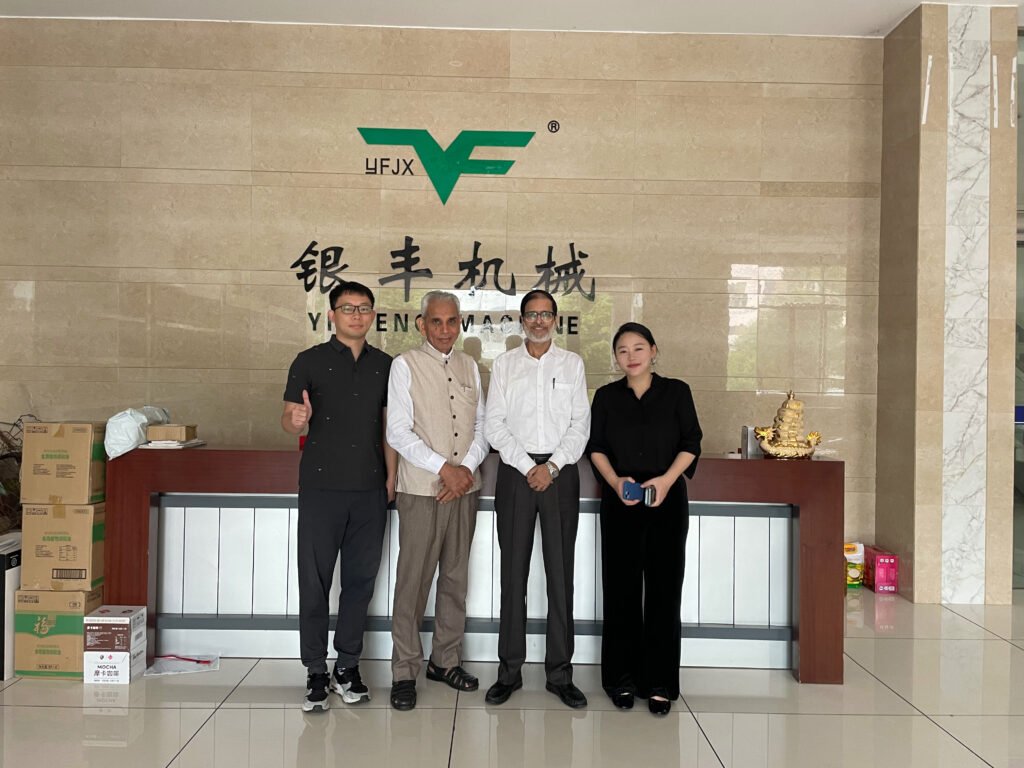
10. Why Choose YF Specifically? (Practical Reasons)
Here’s how I explain it without marketing language:
1) Selection confidence: we can cover coiling/forming/camless/bending so I don’t need to “force” one machine type on you.
2) Faster feasibility confirmation: sample trial and tooling concept reduce your risk.
3) Delivery planning: if you’re under time pressure, I’ll tell you what can ship fast vs what needs production.
4) Support continuity: training + troubleshooting matters more after you start producing.
CTA (put here because buyers are now warmed up):
If you want a fast recommendation, send: (1) drawing, (2) wire diameter, (3) target output, (4) material.
Send Inquiry | Email Me
11. Contact Me: Get a Model Recommendation in 12–24 Hours
You can reach me here:
- Contact Form: https://yfspringmachine.com/contact-us/
- Email: cendly@yinfengmachine.com
- WhatsApp: +86 13738187514
11.1 What to Prepare Before You Contact
To avoid back-and-forth and get a precise recommendation, I prefer:
- spring drawing (PDF/DXF/STEP) or clear photos with dimensions
- wire diameter (min–max)
- material type (if known)
- target output (pcs/hour or pcs/day)
- special notes (tolerance, changeover frequency, any forming limitations)
11.2 Inquiry Message Template (Copy-Paste)
Subject: Spring machine selection (wire: __ mm)
Hello Cendly,
We want to produce the following spring/wire form: __
- Spring type: (compression / extension / torsion / wire form)
- Wire material: __
- Wire diameter: __ mm
- Target output: __ pcs/day (or pcs/hour)
- Tolerance requirement: __
- Changeover frequency: __ designs/week
Attached: drawing / photos / sample video
Please recommend the suitable machine model and tooling concept.
12. FAQ (Buyer Questions I Get Every Week)
Where to put FAQ:
Put FAQ before Conclusion. It captures long-tail search traffic and keeps users on-page.
Q1. What wire diameter range should I choose if my product varies?
I usually recommend selecting a model that covers your true min–max wire range, but also leaves a small margin for future products—without overpaying for a machine that is far beyond your needs.
Q2. Camless vs cam-driven: which is better for frequent changeover?
If you change designs frequently, camless often wins because setup is typically faster and program management is easier. If your production is stable, cam-driven can be very cost-effective.
Q3. Can you test my spring before shipment?
Yes. The safest approach is to confirm feasibility via sample trial (FAT). I always recommend verifying repeatability across a production run, not just one sample.
Q4. What affects spring accuracy the most?
In real production, accuracy is usually influenced by: feeding stability, tooling design, machine rigidity, and servo/control consistency. I prefer to confirm by sample trial whenever possible.
Q5. How fast can I get a quotation?
If you provide a clear drawing + wire diameter + output target, I can usually respond with a recommended category/model direction quickly, then confirm the final configuration after engineering review.
Q6. What should I stock as spare parts for the first year?
I recommend planning a basic spare parts package based on your production intensity (cutting tools, wear parts, sensors/cables where relevant). The goal is to avoid downtime for small components.
Q7. What shipping terms do you support?
Most buyers use FOB/CIF depending on their forwarder and import preferences. When you inquiry, tell me your port and preferred terms.
Q8. What training do you provide?
Remote guidance + documentation is common, and on-site support can be arranged depending on project size and location. I recommend confirming training scope before deposit.
CTA (FAQ end):
If you want a faster answer, send your drawing. I’ll reply with a model recommendation and the key feasibility risks to watch.
Send Inquiry
13. Conclusion
Buying the right spring machine in 2025 (updated for 2026) is not about choosing the most famous brand or the cheapest quote. It’s about matching your wire range, spring type, complexity, output, and changeover frequency—then verifying quality through structure, components, and sample trial.
If you want, I can turn your drawing into a clear recommendation:
- machine type (coiler/former/camless/bender)
- suggested model range
- tooling concept & feasibility risks
- delivery estimate & support plan
Send Inquiry | Email Me | WhatsApp
References
Important note (for EEAT):
Right now, your references are mainly internal pages. Keep some internal references, but add 5–10 external authoritative references (standards/compliance/material specs) later for stronger credibility.
[^1]: Internal: Yinfeng CNC Spring Machine page (models, production lines, testing, packing, delivery).
[^2]: Internal: Yinfeng CNC Spring Coiling Machine page (range and applications).
[^3]: Internal: Yinfeng CNC Spring Forming Machine page (applications and capabilities).
[^4]: Internal: Yinfeng About/Blog pages (definitions, selection logic, certifications, machine types).
[^5]: Internal: Yinfeng Services/Contact pages (support, process, contact methods).
[^6]: Internal/general: Yinfeng blog definitions (What is a spring machine / coiling machine).
[^7]: External (to add): Machinery safety/compliance reference (EU/UK/US depending on your target).
[^8]: External (to add): Spring wire material standards reference (ASTM/EN/ISO).
[^9]: External (to add): ISO quality management reference (ISO 9001 overview).